
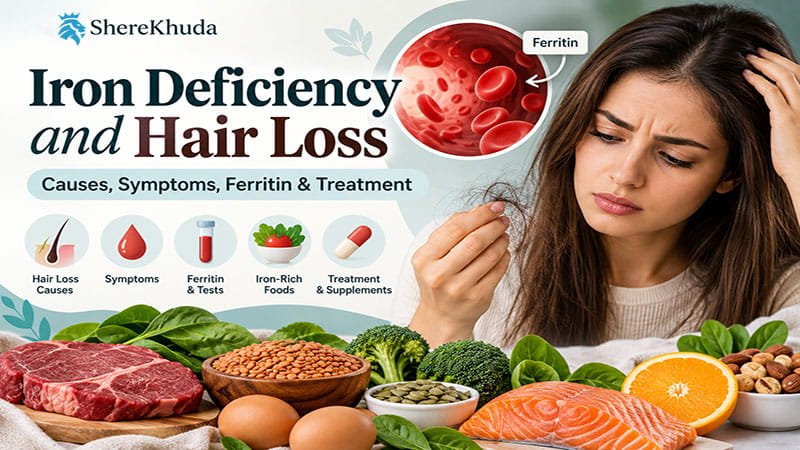
Iron Deficiency and Hair Loss: Causes, Symptoms, Ferritin & Treatment
Experiencing hair loss is definitely frustrating, particularly when the cause is unidentified. Different factors like genes, hormone fluctuations, pressure, diseases, drugs, scalp disorders, and nutrient shortage can all contribute to balding. One of the nutritional factors that people talk about is iron.
An essential body mineral, iron can support a variety of functions in the body, from carrying oxygen to maintaining regular cellular activity.
Iron deficiency happens when the body’s reserves of this mineral fall. Some individuals have signs of iron-deficiency anemia, while others don’t. In a few studies, it was found that low levels of iron stores may be linked to certain hair loss forms that do not result in scarring. Nonetheless, iron deficiency is definitely not the only reason for all cases of hair loss.
As you read along, you will understand the connection between the deficiency in iron and hair loss, how to recognize the symptoms, how ferritin works, which kinds of blood tests would give you the required information, the food rich in iron you can consume if they fit your diet, what times it is best to take supplements, and when persistent hair loss needs to be checked by a medical specialist.
Short answer: Low iron levels can lead to excessive hair fall in certain people, but there are many other reasons for hair fall apart from low iron alone. It’s better to do the test for iron level rather than taking iron supplements just to be safe.
Can Iron Deficiency Cause Hair Loss?
Yes, iron deficiency can be a factor in hair loss for some individuals, but it is far from being the only explanation.
Rigorous research has looked at the connection between iron status and various forms of nonscarring alopecia such as diffuse hair loss. After conducting a systematic review and meta-analysis on data from over 10,000 people, the researchers concluded that women with nonscarring alopecia generally had lower ferritin levels than those who didn’t have the condition. Nevertheless, the team also pointed out that there is not enough information to clearly support a single cause-effect type of explanation.
It is essential to understand the difference. Mere depletion of ferritin doesn’t conclusively show that iron deficiency is why you are facing balding. Similarly, iron supplementation is not a fail-safe method for hair regrowth. Since balding is a symptom with a variety of underlying reasons, one must figure out the exact problem.
If you’re experiencing persistent hair shedding, it’s important to consider other potential causes as well. You can learn more in our guide to Why Your Hair Isn’t Growing, No Matter What You Try.
How Does Iron Affect Hair Growth?
Hair follicles are tissues that grow all the time. They need enough nutrients to keep cells working normally. Iron helps move oxygen through the body. It also plays roles in key cell tasks. Some researchers suggest that low iron levels may affect cells that divide quickly during hair production. That could shift how the hair-growth cycle works.
One sign that can show up is more shedding. Still, researchers are working to sort out the exact link between iron levels and hair follicles. Because of this, it is safer to say an iron shortage could play a part in hair loss. It is not a sure cause for everyone.
Iron shortage may matter more if any of the following fit:
- Hair shedding happens all over, not in just one spot
- Other signs of iron shortage are present
- Heavy menstrual bleeding occurs
- Your meals do not include much iron
- You recently had a large blood loss event
- Blood work shows low iron stores
- You have a health issue that can reduce nutrient absorption
Iron Deficiency vs Iron-Deficiency Anemia
Iron deficiency is often compared with iron-deficiency anemia.They are related, but they do not mean the same thing.
What is iron deficiency?
Iron deficiency means the body has too little usable iron. It also can mean low iron stored in the body. This can start before anemia shows up.
What is iron-deficiency anemia?
Iron-deficiency anemia happens when iron levels drop far enough to disrupt hemoglobin production. Hemoglobin is needed to form healthy red blood cells.
Possible symptoms can include:
- Fatigue
- Feeling weak
- Headaches
- Dizziness
- Pale skin
- Breathlessness with activity
- Less stamina during exercise
- Brittle nails
- Unusual cravings, like craving ice
Not all people with iron deficiency notice clear symptoms, especially early on.
What Is Ferritin and Why Is It Important for Hair Loss?
If you look up “low ferritin and hair loss,” you will likely see ferritin brought up again and again.
Ferritin is a protein that keeps iron in the body. A ferritin blood test is often used to check how much iron is stored.
In cases of hair loss with no clear cause, clinicians might look at ferritin along with other laboratory tests and your symptoms. Studies have reported that some women with nonscarring hair loss tend to have ferritin levels that are lower. Even so, ferritin is not something to read alone.
Ferritin can change when the body is dealing with inflammation or other medical issues. Because of that, your doctor may review your full history, your symptoms, your blood count results, your ferritin level, and other iron-related lab values to judge whether iron deficiency is likely.
Is there one ferritin level that causes hair loss?
No.
There is not one ferritin value that clearly and reliably proves that iron deficiency is the cause of hair loss. Research has used different cutoff points, so test numbers have to be judged with the bigger picture in mind. That is one reason doctors do not advise iron pills based only on hair loss.
What Blood Tests Check for Iron Deficiency?
If iron deficiency is a concern, a clinician may use several tests.
Complete Blood Count, or CBC
A CBC can show whether anemia is present. It also gives details about red blood cells and hemoglobin.
Ferritin
This test is used to estimate stored iron.
Serum iron
This measures how much iron is in the blood at the time of the test.
Transferrin saturation
- This value shows how much iron is ready to be used.
- Your doctor may suggest more tests based on your symptoms and your past health.
- Which tests are needed can change from one person to the next.
Symptoms of Iron Deficiency That May Occur Alongside Hair Loss
Hair loss alone does not prove iron deficiency. Still, if hair shedding happens along with other signs, it is reasonable to talk with a healthcare professional about iron levels.
Possible symptoms include:
1. Persistent Fatigue
You may feel drained even after sleep.
2. Weakness
Iron and anemia can lower how well oxygen moves in the body, which may feel like weakness.
3. Dizziness or Headaches
Some people report dizziness or headaches with iron-deficiency anemia.
4. Pale Skin
Anemia can make skin look paler than usual.
5. Shortness of Breath
With less oxygen in the blood, breathlessness can happen when you move around.
6. Brittle Nails
Nail changes can happen with diet gaps, but they do not point only to iron deficiency.
7. Increased Hair Shedding
Hair may thin or shed due to nutrition issues, but hair loss can have many causes. The American Academy of Dermatology notes that low iron, low protein, low zinc, and low biotin can be linked with visible hair loss.
Signs of Vitamin D Deficiency
Low vitamin D levels don’t always cause symptoms, but some people may experience:
- Hair shedding
- Muscle weakness
- Bone pain
- Fatigue
- Frequent infections
What Causes Iron Deficiency?
Understanding why your iron is low is just as important as identifying that it is low.
Common causes include:
Heavy Menstrual Bleeding
Heavy periods can cause ongoing iron loss and increase the risk of deficiency.
Pregnancy
Iron requirements increase during pregnancy, making adequate intake particularly important.
Low-Iron Diet
A diet that provides little iron can contribute to inadequate intake over time.
Blood Loss
Blood donation, heavy menstrual bleeding, gastrointestinal bleeding, and other forms of blood loss can reduce iron stores.
Reduced Absorption
Certain digestive conditions can interfere with nutrient absorption and make it harder for the body to obtain enough iron from food.
Increased Nutritional Requirements
Certain stages of life or health conditions can increase the body’s need for iron. The NIH notes that iron requirements vary by age, sex, pregnancy, and other factors. For example, the recommended dietary allowance for adults aged 19–50 is 8 mg per day for men and 18 mg per day for women, while pregnancy increases the recommendation to 27 mg per day.
Iron-Rich Foods for Hair Health
If your diet does not provide enough iron, improving food choices can help you meet your nutritional needs.
Iron comes in two main dietary forms:
- Heme iron: found mainly in animal foods
- Non-heme iron: found mainly in plant foods and fortified foods
Heme iron is generally more bioavailable than non-heme iron.
Animal-Based Iron Sources
Examples include:
- Lean red meat
- Beef
- Poultry
- Seafood
- Shellfish
- Plant-Based Iron Sources
Examples include:
- Lentils
- Beans
- Chickpeas
- Spinach
- Peas
- Tofu
- Nuts
- Pumpkin seeds
- Fortified cereals
- Fortified breads
- Some dried fruits
The NIH lists lean meat, seafood, poultry, fortified cereals, beans, lentils, spinach, nuts, and some dried fruits among foods that provide iron. Top 12 Superfoods for Healthy Hair Growth
How Vitamin C Can Help With Iron Absorption
Vitamin C is a powerful tool to aid in the absorption of iron from plant sources since it enhances non-heme iron assimilation.
The pairs you could make are:
- Lentils and tomatoes
- Chickpeas and bell peppers
- Beans and broccoli
- Spinach and citrus fruits
- Fortified cereal and strawberries
Some foods with high levels of vitamin C are citrus fruits, strawberries, sweet peppers, tomatoes, and broccoli.
Nevertheless, it should not be inferred that vitamin C is a cure for hair loss. What it mainly does is facilitate the absorption of iron from other foods.
Foods and Habits That May Reduce Iron Absorption
The amount of iron that can be absorbed by the body depends on other substances you consume as well as the kind of food containing iron. This is more so true when it comes to the non-heme form of iron, which primarily originates from vegetable materials. We are going to have an example where food constituents either hinder or promote the absorption of iron, respectively, and vitamin C is one of the latter.
However, you should not consider excluding nutritious foods just because they contain the kinds of substances that affect the absorption of iron. In fact, you should concentrate on maintaining a well-diversified menu and making wise choices in food pairing. When an iron deficiency is confirmed, a dietitian or a healthcare professional can be a great support in helping you come up with a well-balanced meal plan.
Should You Take Iron Supplements for Hair Loss?
No,it should be under the guidance of a doctor. This may be one of the key messages in this entire article. Suppose the test indicates that the individual may have low iron levels, a health care professional may advise taking iron supplements based on the severity and reason behind the iron deficiency.
In contrast, if your iron levels are at their normal range, taking extra iron to combat your hair loss might just end up being a waste of time as well as a potential cause of harm. The American Academy of Dermatology suggests that iron, zinc, or biotin supplements may be useful if blood testing has identified some deficiency rather than routine use for hair loss. Iron overload can be toxic.
Why taking unnecessary iron can be a problem
Iron in excess of what is necessary from supplements can lead to:
- Nausea
- Constipation
- Stomach pain
- Abdominal cramps
- Vomiting
- Diarrhea
Highest doses can be hazardous too. The NIH lists one’s tolerable upper intake limit (TUL) for iron to be 45 mg per day coming from both dietary and supplement sources combined. However, some physicians might recommend higher dosing when iron deficiency is to be managed as a result of serious condition like heavy blood loss, etc.
It definitely does not mean 45 mg is the right dose to prevent hair loss. It is better to choose a right dose after consulting your doctor about the way you are feeling health-wise.
What Should You Look for in an Iron Supplement?
If your doctor has suggested that you take iron tablets, you are probably thinking about what to buy. In that case, a product claiming that it “prevents hair loss” or “grows your hair” shouldn’t be your only selection criterion.
You are advised, therefore, to look at:
1. Check the Amount of Elemental Iron
Versions of iron with higher or lower percentages of elemental iron exist. The main information you must have from the bottle is the dose of elemental iron and not only the total amount of the iron compound.
2. Consider the Form of Iron
The kind of iron supplement can be either ferrous sulfate, ferrous gluconate, ferric citrate, or other formulations. An appropriate form will be identified for you by a doctor or your other health care practitioner.
3. Check for Unnecessary Ingredients
Most people prefer buying iron supplements without other additives but only iron. On the other hand, there may be no harm if the product is a combination of iron with several nutrients. However, it must be based on your medical recommendation.
4. Don't Assume a Higher Dose Is Better
Taking higher dose of iron doesn’t necessarily mean that you are getting its health benefits in a larger measure. On most occasions, taking more is likely causing problems. Taking too much of a drug raises the risk of adverse reactions and can be dangerous.
5. Consider Your Medications and Health Conditions
Iron supplements might interact with certain medications and may not be suitable for everybody. In case you suffer from a disease that leads to iron overload, like hereditary hemochromatosis, taking iron supplements would be highly risky to your health.
Important: If you’re specifically looking for hair-growth supplements, don’t choose a product just because it contains iron. First determine whether you actually need additional iron.
Can Iron Supplements Regrow Hair?
Many online sources of information mislead and confuse the readers at this point. Iron deficiency, when identified as a cause of hair loss or thinning hair, can indeed become one of the key factors that help restore the hair and overall health. However, hair regrowth through iron tablets is not certain by any means. Studies on the effects of iron supplementation on hair regeneration are quite limited.
The authors of a previous review were of the opinion that while a link between low iron stores and widespread hair thinning seems reasonably common, the evidence is still somewhat inconclusive, mainly due to the fact that the studies vary in methodology as well as because there are only a few controlled treatment studies available.
A different authors in a previous review mentioned that ferritin levels in women with non-scarring alopecia are below the normal ranges, yet it remained questionable if there was a definite causal chain, since a clear-cut relationship has not yet been proven.
So the more accurate message is:
Treat confirmed iron deficiency for your health, and hair improvement may occur if iron deficiency was contributing to the shedding.
How Long Does It Take for Hair to Improve After Iron Deficiency?
There is no fixed timeline. Hair follicles grow in different stages, and it is quite normal for shedding to happen even after the root reason that caused hair loss has improved.
Main factors influencing hair recovery include:
- The degree of iron deficiency
- How long the deficit persisted
- The form of hair loss
- If the original reason for hair loss was addressed
- Addition of other nutrient deficiencies
- Hormonal imbalance
- Familial predisposition
- General condition of the person’s health
It is these factors that explain why it is better to work towards removing the cause of the problem rather than getting your hair re-grown without any delay.
Iron Deficiency and Telogen Effluvium
Telogen effluvium is defined as a hair loss of type that is characterized by widespread hair fall following a stressful or unhealthy body condition or nutritional event.
Possible triggers:
- Serious illness
- Major emotional stress
- Sudden weight loss
- Childbirth
- Surgery
- Nutritional deficiencies
- Certain medications
Iron deficiency is considered one of the possible causes of telogen effluvium, though this link is still a subject to debate.Sudden increase in hair shedding when showering, brushing, or laundering may be a cause for concern, but that does not imply iron deficiency. Professional dermatologists are able to assess the situation and decide whether further tests are necessary.
Other Causes of Hair Loss Besides Iron Deficiency
Low iron levels don’t mean your hair loss is entirely due to it alone; there are several other possible causes.
They include:
Genetic Hair Loss
Baldness is among the major causes of thinning hair, it can be hereditary as well and is usually called “female or male pattern baldness”.
Hormonal Changes
If a woman stops taking birth control pills, for example, or if the levels of thyroid hormone in the blood are low (hypothyroidism) hair loss may be a sign that something’s wrong.
Thyroid Problems
Hair thinning or even excessive shedding can sometimes point to a thyroid disorder.
Stress or Illness
Both types of stress, namely physical and psychological, often lead to Telogen Effluvium (temporary hair loss).
Rapid Weight Loss
Lack of nutrition is an important factor that may be contributing to hair loss; extremely low caloric intake can severely affect the growth of your hair, protein, and the necessary vitamins, and you must have these elements for proper hair growth.
Protein Deficiency
A deficiency in dietary proteins, which serve as a building block of hair, might lead to hair problems such as thinning and hair loss.
Zinc Deficiency
One of the nutritional issues that may potentially lead to hair loss is zinc deficiency, which results after one does not consume recommended levels of zinc in his/her diet to keep hair healthy.
Scalp Conditions
Seborrhea, seborrhoeic dermatitis, and even some types of infections can not only trigger hair loss but also lead to hair thinning.
Autoimmune Hair Loss
Autoimmune diseases like alopecia areata may be one cause of hair loss. If you’re losing hair for no reason, you should realize that it may not be only iron deficiency.
How to Support Healthy Hair While Correcting Iron Deficiency
Healthy hair does not get all the necessary nutrients from a single source. That’s why it is important for you not to forget any one nutrient. The best way you can do this is by eating the right food with sufficient number of calories and various micronutrients.
Eat a Balanced Diet
Include:
- Foods that contain a lot of Protein
- Mother of pearl foods, i.e., food items rich in iron
- Fruits and vegetables
- Whole grains
- Legumes
- Healthy fats
Get Enough Protein
A lack of protein deprives the scalp of amino acids that are indispensable for producing and maintaining keratin hair shaft structure.
Include Vitamin C-Rich Foods
If you eat foods containing vitamin C and also take iron from plants, your body can better absorb non-heme iron, which is the type from plants.
Avoid Extreme Dieting
A very low-calorie diet may result in hair loss.
Take Supplements Only When Appropriate
Differentiate supplements from other types of treatment and don’t treat your hair solely with the help of vitamins and minerals.
Protect Your Hair
Aim not to use tools at high temperatures or those that are chemical in strong concentrations, which can affect the health of hair. Do not wear very tight hairstyles that cause stress in the hair shaft constantly.
For practical at-home hair-care ideas, you can also explore 10 Easy DIY Hair Masks You Can Make at Home for Smooth, Frizz-Free Hair.
Iron Deficiency and Hair Loss: When Should You See a Doctor?
Consider speaking with a healthcare professional if you have:
- Sudden or severe hair shedding
- Persistent diffuse thinning
- Patchy bald spots
- Heavy menstrual bleeding
- Persistent fatigue
- Dizziness
- Weakness
- Shortness of breath
- Unexplained weight changes
- A history of significant blood loss
- Digestive symptoms
- Hair loss that continues despite improving your diet
After examining your scalp and hair, a dermatologist can advise you on the right course of action and tell you what hair loss type you may have. Your symptoms alongside medical history are the main determining factors of whether or not you should undergo blood tests.
The American Academy of Dermatology (AAD) states that identifying the root cause of hair loss is more effective than using supplements that claim to stimulate hair growth.
Iron Deficiency and Hair Loss in Women
Iron-deficient women have been reported more with iron-deficiency anemia due to the menstrual bleeding cycle, so women of reproductive age are more susceptible to it. Menstruation that is heavy enough to draw blood on the clothes can boost iron demand and slowly deplete iron stores.
Iron requirement increases during pregnancy too – the National Institutes of Health (NIH) list a daily iron RDA of 27 mg during pregnancy, whereas for non-pregnant women aged 19-50, the daily requirement is 18 mg. Discussing the possibility of an iron test with a healthcare professional may be the right idea when you notice hair loss together with heavy periods, fatigue, or any other signs pointing toward iron deficiency.
Iron Deficiency and Hair Loss in Men
Iron deficiency is not only a woman’s problem. It can, of course, occur in men but may have different root causes. When a man has confirmed iron deficiency with no apparent explanation in his diet, it’s better to find out the real source of the deficiency rather than merely starting an iron supplement.
Some of the reasons can be: chronic bleeding, inadequate consumption of foods rich in iron, or intestinal absorption problem. Recovery consists in raising the level of iron only for a short period, but at the same time, one will try to discover the reasons why such a deficiency happened initially.
Can You Get Enough Iron From Food?
The majority of people get quite sufficient iron from their diets that include the right kind of foods
Dietary sources containing good amounts of iron (either heme or non-heme) are :
- Meat
- Poultry
- Seafood
- Lentils
- Beans
- Chickpeas
- Spinach
- Peas
- Nuts
- Seeds
- Fortified cereals
- Fortified breads
In a vegetarian lifestyle, iron deficiency can be a concern because the absorption of non-heme iron is different, and thus combinations of food play a significant role. Combining sources of iron-rich plants with those that are high in vitamin C may enhance non-heme iron absorption.
Iron-Rich Hair-Friendly Meal Ideas
Here are a few simple combinations:
Breakfast
Fortified cereal + strawberries or another vitamin C-rich fruit
Lunch
Lentil salad + tomatoes + bell peppers
Dinner
Lean meat or seafood + vegetables + whole grains
Vegetarian Option
Chickpeas + spinach + tomatoes + lemon
These meals are not a treatment for hair loss. They are simply practical ways to include iron and other nutrients in a balanced diet.
Do Hair Growth Supplements Always Contain Iron?
Not necessarily.
Hair supplements can contain combinations of:
- Biotin
- Vitamin D
- Zinc
- Iron
- Vitamin C
- Vitamin E
- Other vitamins and minerals
Having a long list of ingredients isn’t always a sign of a better supplement. In fact, the American Academy of Dermatology warns that taking too much of some nutrients may lead to problems, and it suggests identifying any deficiencies first before going for supplements mainly for hair growth. As a result, in most cases, a strategic approach of targeted supplements is better than high-dose multiple-supplement regimen at the same time.
Iron Deficiency and Hair Loss: Key Takeaways
A few of these things should stay with you if it is your last recollection of the article: Hair loss caused by iron deficiency may be related to specific types of hair shedding. Some forms of nonscarring alopecia have been connected with low ferritin, but the exact mechanism has not been fully worked out. The level of ferritin is often used to measure iron reserves. The absence of a unique ferritin value that proves hair loss is due to iron deficiency.
- Iron-rich food can be helpful in getting the right amount of iron for your body.
- Getting some vitamin C might enhance the body’s ability to get more of the iron, non-heme kind of it.
- Unless hair loss is diagnosed as being iron-related, hair loss supplements should be used with caution and not prescribed just on the basis that the hair is thinning!
- Getting too much iron could give you side effects or even be toxic.
- When iron deficiency is the primary cause of hair loss, then getting treatment for the deficiency could be the major factor in bringing back your hair.
- If hair loss is going on for years, there may be another reason other than just being low on iron.
- Dermatologists and other health professionals can help assess if the tests might be warranted.
Can iron deficiency cause hair loss?
Iron deficiency can, in some individuals, even lead to diffuse shedding of the hair. Research has shown a correlation between reduced ferritin levels and specific types of non-scarring alopecia. Nevertheless, it is not certain that a deficiency in iron is the root cause of every case of hair loss.
Can low ferritin cause hair loss without anemia?
There is no standard ferritin level that will demonstrate that hair loss has an iron deficiency cause. Various studies define low ferritin levels differently; hence, a single number cannot be the sole determining factor in determining whether hair loss is caused by iron deficiency.
What ferritin level is associated with hair loss?
Only after an iron deficiency has been diagnosed or a medical practitioner orders that your need for iron be supplemented. Extra amounts of iron can be unpleasant, especially in very large doses, where it is toxic.
Should I take iron supplements if my hair is falling out?
Gaining your iron intake from these types of food would be very effective if you are lacking this mineral in your diet: lean meat, seafood, poultry, lentils, beans, chickpeas, spinach, peas, nuts, seeds, iron-fortified cereals and breads.
Does vitamin C help iron absorption?
Yes, it does. Vitamin C helps increase the body’s absorption of non-heme iron, which mainly comes from plant sources. Hence, combining lentils, beans, or even a plate of spinach with the goodness of vitamin C through citrus fruits, for example, is a smart move.
How long does it take for hair to grow back after correcting iron deficiency?
Predicting the time frame in a precise way is not possible. Hair naturally goes through a growth cycle, so any change or improvements are going to depend upon the type of hair loss, the degree of the iron deficiency, its cause, and other issues that might be influencing it.
Can too much iron cause hair loss?
Hiding behind an excess supply of iron, the body is actually under threat of a potential toxicity problem and may experience some gastrointestinal disorders. That’s why iron supplements are recommended with care rather than consuming very big amounts just to get hair growth benefits.
Is iron deficiency the only nutritional cause of hair loss?
No. There are other nutrient deficiencies, like a deficiency in protein and zinc, as well as a lack of intake on the part of different nutrients, which can be responsible for hair loss too.
What should I do if my hair keeps falling out even after correcting iron deficiency?
If hair loss continues, speak with a dermatologist or other qualified healthcare professional. Genetic hair loss, thyroid disorders, hormonal changes, stress, illness, medications, scalp conditions, and other nutritional factors may need to be considered.
Wrapping Up
Iron is required for good health, and a deficiency in iron can result in many health problems. There has also been a suggestion by research that having iron deficiency is linked to diffused hair loss. Still, iron supplements are not a remedy that works well in the area of hair loss. So, if the idea comes into your mind that a lack of iron is leading to you losing your hair, then you should find out the cause that is responsible, rather than you just take an iron supplement as if it solves all the problems.
A healthy diet gives you the essential nutrients necessary for nourishing the hair, and confirmed deficiencies may have to be treated by means of a targeted treatment plan made by a professional. If hair loss persists, comes suddenly, is severe, or is unexplained, discovering the real cause is worth more than just including another supplement to your daily routine.
- NIH Office of Dietary Supplements: Iron
- American Academy of Dermatology: Hair Loss Diagnosis and Treatment
- American Academy of Dermatology: Hair Loss Tips
- PubMed: Iron Deficiency and Nonscarring Alopecia in Women
- PubMed: Iron Deficiency and Diffuse Nonscarring Scalp Alopecia
- PubMed: Diagnosis and Treatment of Iron Deficiency and Hair Loss
- PubMed: Iron Deficiency in Female Pattern Hair Loss and Telogen Effluvium
- PubMed: Decreased Serum Ferritin and Alopecia in Women
- PubMed: Serum Ferritin Levels and Hair Loss
- NIH Office of Dietary Supplements: Vitamin C


Telogen (Resting Phase)
Iron deficiency may contribute to hair loss and increased shedding, particularly when iron stores are low. Ferritin and other blood tests can help assess iron status, while iron-rich foods and vitamin C support healthy intake and absorption. Iron supplements should only be used when needed, as correcting a confirmed deficiency may support hair recovery but does not guarantee regrowth.