





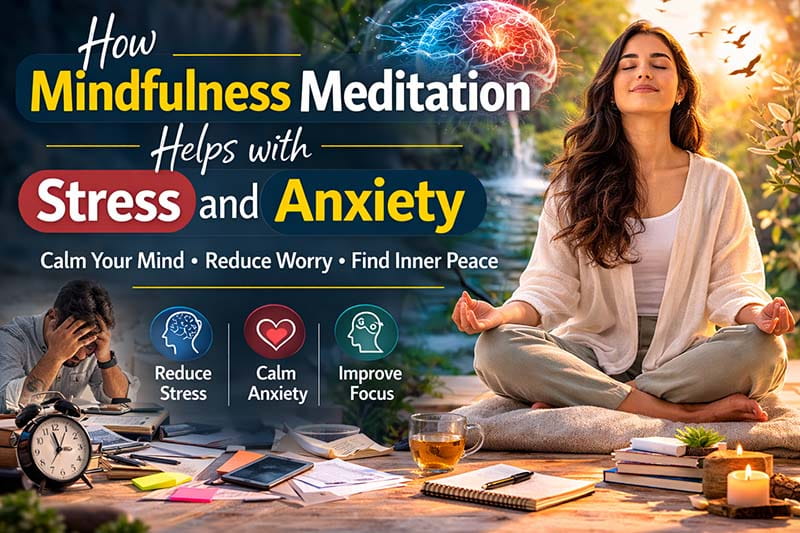
How Mindfulness Meditation Helps with Stress and Anxiety
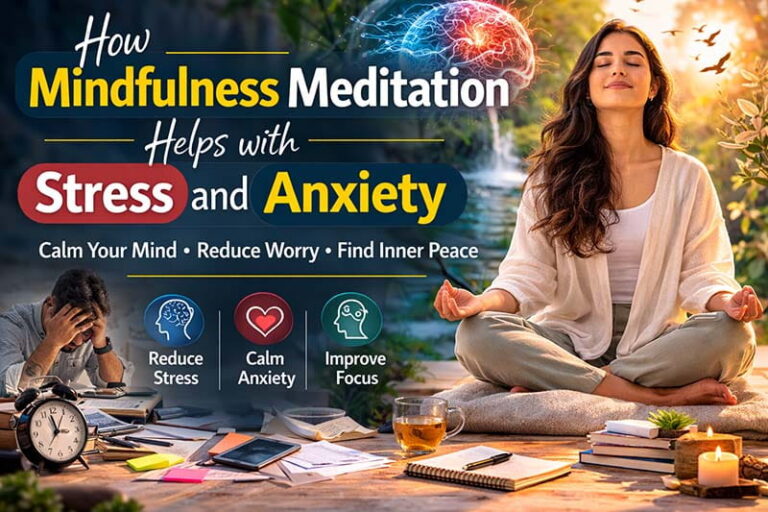
Stress and anxiety are a big part of life today. Deadlines, financial pressure, constant notifications, and uncertainty are always buzzing with notifications. It’s like our nerves are always on edge, waiting for the next thing to happen. A lot of people are looking for ways to deal with these feelings that don’t involve taking medicine all the time. One thing that’s been studied a lot and that experts often recommend is mindfulness meditation.
This article is going to take a closer look at how mindfulness meditation can help with stress and anxiety. We’ll explore why it works, from a psychological and neurological standpoint, and give you some tips on how to start using it in your daily life to build up your emotional strength over time. By understanding how mindfulness meditation works and making it a habit, you can better handle stress and anxiety and improve your overall well-being.
Understanding Stress and Anxiety in the Modern World
Stress is what happens when our body thinks it’s in trouble. It’s like a warning sign that something’s not right. When we’re under pressure, our hearts beat faster, our muscles get tense, and we start breathing really quickly. Our body also releases special chemicals like cortisol and adrenaline to help us deal with the situation. This can be helpful if we’re in a dangerous spot, but if it keeps happening because of things like work emails, comparing ourselves to others, or constant worrying, it can lead to feeling really tired and burned out.
Anxiety is similar, but it’s more about worrying about what might happen in the future. It’s like having a constant fear of something bad happening, even if there’s no real reason to think that. When we’re anxious, we might feel restless, have trouble sleeping, and have a hard time focusing. If we’re anxious for a long time, it can affect our whole body and mind – our sleep, our digestion, our ability to concentrate, and even our emotions. The thing is, stress and anxiety aren’t the problem themselves. The problem is how we deal with our thoughts and feelings. That’s where mindfulness meditation can really help. It can teach us to look at our thoughts and feelings in a different way, so we’re not controlled by them.
By being more mindful, we can learn to manage our stress and anxiety, and feel more calm and in control. Mindfulness meditation is a powerful tool that can help us shift our perspective and relate to our thoughts and feelings in a more positive way. It’s not about avoiding stress and anxiety, but about learning to live with them in a way that doesn’t overwhelm us.
By practicing mindfulness, we can develop greater self-awareness, learn to recognize the signs of stress and anxiety, and take steps to manage them before they take over. This can lead to a more balanced and fulfilling life, where we’re able to handle challenges with greater ease and confidence.
What Is Mindfulness Meditation?
Mindfulness meditation is all about being present in the moment, without judgment. You’re not trying to push away stress or anxious thoughts, but instead, you’re learning to observe them in a calm way. When you’re practicing mindfulness, you focus on something that’s happening right now, like your breath, how your body feels, or the sounds around you.
Your mind will wander, and that’s okay – it’s what minds do. But when it does, you gently bring your attention back to what you were focusing on. Over time, this helps your brain learn to deal with stress in a different way. Instead of getting caught up in thoughts like “what if this goes wrong?” or “I don’t think I can handle this,” you start to see these thoughts for what they are – just thoughts, not facts. This helps take some of the emotional charge out of them, so they don’t feel as overwhelming. It’s a subtle shift, but it can make a big difference in how you feel.
By being more mindful, you can learn to respond to stress in a more thoughtful way, rather than just reacting to it. This can help you feel calmer, more focused, and more in control, even when things get tough.
Mindfulness meditation is a great way to deal with stress. When you focus on your breathing and the present moment, you help your nervous system relax. This is called the “rest and digest” system, and it stops your body from going into panic mode. Regular mindfulness practice can really help your body feel better. It lowers the stress hormone cortisol, reduces muscle tension, and helps your heart beat more steadily. Your body starts to learn that not every little thing is a big deal, and that helps you feel safe.
Mindfulness meditation also helps your brain work better. It makes the part of your brain that helps you make decisions and control your emotions stronger. At the same time, it calms down the part of your brain that makes you feel scared or anxious. This helps you stay calm and clear-headed when you’re stressed, instead of feeling overwhelmed.
By practicing mindfulness meditation, you can train your body and brain to handle stress in a healthier way. It’s a simple but powerful tool that can make a big difference in how you feel.
How Mindfulness Meditation Helps with Anxiety
Anxiety can really get out of control when we start thinking about all the bad things that could happen. Our minds start racing, imagining the worst-case scenarios, and it’s hard to stop. But mindfulness can help break this cycle by bringing our attention back to the present moment.
When we’re mindful, we observe our anxious thoughts without judgment. We don’t try to push them away or change them; we just notice them. And that’s when something interesting happens – those thoughts start to lose their power. We begin to see that they’re just temporary thoughts, not predictions of what’s going to happen or absolute truths. This is called cognitive defusion, and it’s a really powerful tool.
Mindfulness also helps us deal with uncomfortable feelings in a different way. Instead of trying to avoid them or react impulsively, we learn to sit with them calmly. So, if we’re feeling anxious and our chest is tight or our breathing is rapid, we don’t try to fight it or escape it. We just gently observe it, and that helps reduce the behaviors that drive anxiety.
As we keep practicing mindfulness, our brains start to change. We develop a new habit of returning to the present moment, rather than getting caught up in worries about the future. And that’s when we start to build resilience and emotional stability. It’s not that we’ll never feel anxious again, but we’ll be better equipped to handle those feelings when they arise.
Over time, with patience and practice, we can learn to manage our anxiety in a more mindful way. It’s not always easy, but it’s worth it. By being more present and aware, we can reduce our anxiety and live more fulfilling lives.
The Role of Present-Moment Awareness
Stress and anxiety thrive in mental time travel. The mind replays past mistakes or anticipates future failures. But mindfulness meditation can help us shift our focus away from all those “what ifs” and back to what’s actually happening right now.
When we pay attention to our breath, or notice the sensations in our body, or just listen to the sounds around us, we’re training our brains to stay grounded in reality. And the truth is, most of the time, we’re safe in the present moment. Recognizing this can really help reduce a lot of unnecessary mental suffering. Being aware of the present moment doesn’t mean we’re ignoring our responsibilities or not planning for the future.
It just means we’re not getting caught up in automatic thoughts that can control us. We’re aware of our thoughts, but we’re not letting them run the show. We can think about the future and make plans, but we’re doing it in a way that’s intentional and mindful, rather than getting sucked into worries and fears.
Emotional Regulation and Self-Awareness
Mindfulness meditation helps you become more aware of yourself. You start to notice when you’re getting stressed, like when you’re breathing too quickly, feeling irritable, or having lots of thoughts racing through your mind. If you can catch these signs early, you can do something about your stress before it gets out of control.
When you feel yourself getting stressed, you can stop and take a moment. This pause gives you some space between what’s happening and how you react. In that space, you have a choice. You might decide to take a few deep breaths, walk away from a conversation that’s bothering you, or think about whether your thoughts are really true. Being able to control your emotions like this is one of the best things about mindfulness meditation. It helps you go from reacting impulsively to making conscious choices.
This can really change how you behave and interact with others. By being more mindful, you can respond to situations more thoughtfully, rather than just reacting without thinking. This can lead to better relationships, less stress, and a greater sense of calm and well-being.
Long-Term Benefits for Mental Health
Consistent mindfulness meditation practice is associated with improved mood, better sleep, enhanced focus, and reduced symptoms of generalized anxiety and chronic stress. It supports mental clarity and increases feelings of inner calm.
Over time, practitioners often report a deeper sense of acceptance toward life’s uncertainties. Instead of resisting discomfort, they develop psychological flexibility. This flexibility makes it easier to adapt to change and navigate challenges without excessive worry.
Mindfulness does not remove life’s difficulties. Instead, it changes your relationship with them. The external situation may remain the same, but your internal response becomes steadier and more balanced.
How to Start Using Mindfulness for Stress and Anxiety
You don’t need any special gear or a lot of free time to start mindfulness meditation. Just set aside 5 to 10 minutes each day. Sit in a comfy spot, close your eyes, and focus on your breathing. Pay attention to how the air feels going in and out of your body.
When thoughts pop up – and they probably will – just acknowledge them and gently bring your focus back to your breath. Don’t be too hard on yourself if your mind starts to wander. The act of coming back to your breath is actually the practice. As you get more into it, you can try other types of meditation, like scanning your body or taking mindful walks.
You can even just take short breaks throughout the day to really notice what’s around you. The key thing is to be consistent – it’s better to do a little bit every day than to try to do a lot at once. Even just a few minutes a day can help change how you react to stress and anxiety over time.
Why Mindfulness Meditation Works Better Over Time
Mindfulness meditation is something you get better at over time, it’s not a magic solution. It’s like building up a muscle, you need to keep practicing to see results. Every time you catch your mind wandering and bring it back to the present, you’re making the connections in your brain stronger, which helps you stay calm and aware.
If you keep practicing, you’ll still have stressful things happen, but you’ll be able to bounce back faster. Instead of feeling anxious for a long time, you’ll be able to calm down and feel normal again sooner. This adds up and can make a big difference in how you feel mentally and emotionally over time.
Wrapping up
Mindfulness meditation can really help with stress and anxiety by calming your nerves, reducing the noise in your brain, and helping you deal with your emotions better. It also changes how you think about your thoughts, which can be really powerful. It’s not going to make all your problems disappear, but it can help you handle them in a better way.
In a world that’s always trying to distract you, mindfulness brings your attention back to what’s happening right now. That can be a huge relief if you’re feeling overwhelmed and anxious all the time. If you stick with it and keep practicing, mindfulness meditation can become a part of your daily life, helping you feel more grounded, balanced, and at peace.