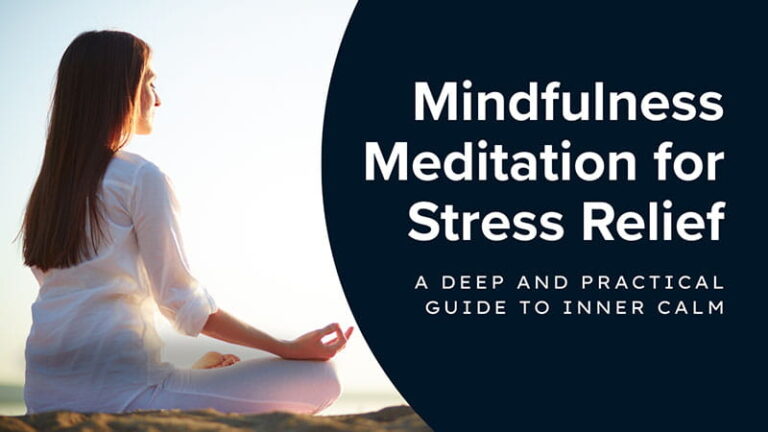
Yes, a morning yoga routine can indeed bring energy and focus to your day. Such a routine not only energizes the body but also sharpens the mind and provides a feeling of tranquility before the day gets busy. Practicing yoga in the morning does more than simply exercising; it becomes a daily ritual that enhances productivity and emotional stability.
Benefits of a Morning Yoga Routine for Energy and Focus
1. Increases Blood Flow & Vitality
Gentle stretches and mindful breathing stimulate circulation, delivering oxygen to muscles and brain cells, making you feel more alert.
2. Enhances Mental Clarity
Morning yoga is a natural brain booster. By reducing mental clutter, it primes your mind for sharper decision-making.
3. Reduces Stress from the Start
Incorporating mindful breathing into your yoga flow calms the nervous system, lowering morning anxiety before it spirals. For more techniques, try these breathing exercises for stress relief.
4. Improves Flexibility & Posture
Practicing yoga first thing helps counter stiffness from sleep, while strengthening postural muscles to keep you upright and confident.
Step-by-Step Morning Yoga Flow for Energy & Focus
To ensure a deep breath and mindfulness, aim for a session that lasts between 15 and 20 minutes, moving slowly and mindfully.
Mountain Pose (Tadasana): When you are standing straight, rolling your shoulders back, and taking deep breaths to concentrate your mind will become simple.
Forward Fold (Uttanasana): Initially, you can stretch your hamstrings if they are tight, and at the same time, you can also give your spine some relief.
Cat-Cow Stretch (Marjaryasana–Bitilasana): Prepare your spine for the practice by doing this stretch, and also make your breath and movement in sync.
Downward-Facing Dog (Adho Mukha Svanasana): This keeps your circulation going well and also gives you a burst of energy.
Warrior II (Virabhadrasana II): With this, you can increase your strength, stability, as well as mental focus.
Tree Pose (Vrikshasana): This practice will train your body to maintain its equilibrium and also help your mind to focus.
Seated Forward Bend (Paschimottanasana): This will relax your mind, and at the same time, you will be able to stretch the back body.
Easy Seated Meditation, 2–3 minutes of deep, slow breathing can be your ending note.
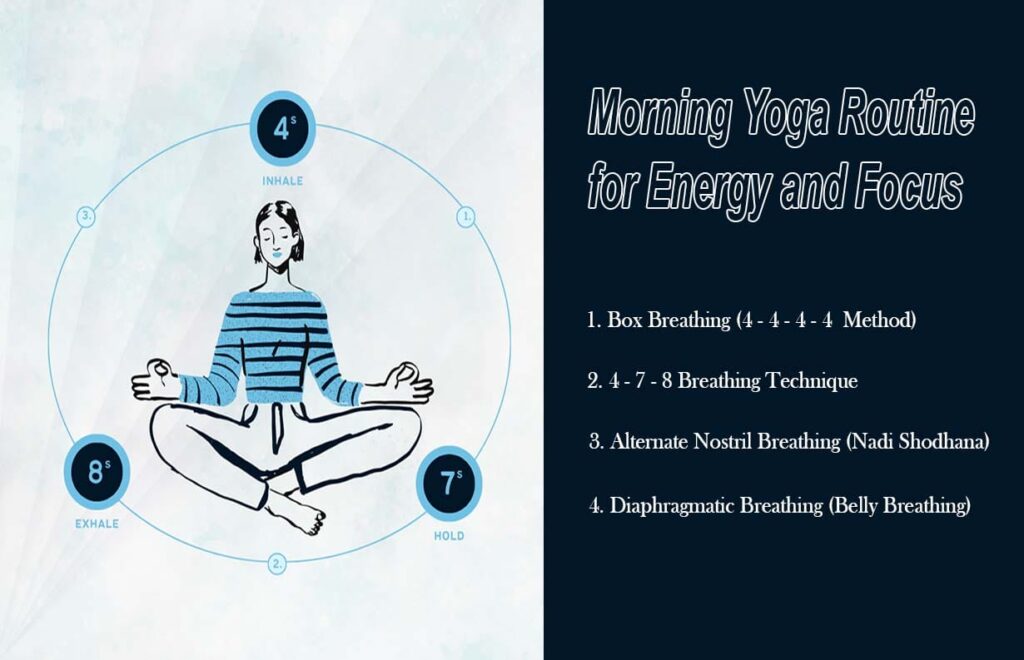
Yoga, when combined with breathing, greatly increases its utility. For a quick mental refresh, try alternate nostril breathing (Nadi Shodhana) or box breathing. We have these and more in our new guide to mindful breathing for clarity.
Tips to Make Morning Yoga a Habit
Get ready the night before: Place your mat and yoga apparel.
Limit the time to a few minutes: Just 10 minutes can be very effective.
Associate with a reminder: Connect your practice with a habit like brewing tea.
Track your progress: Employ a diary or an app to keep up with your routine.
Coordinate your day: Practice our evening yoga for comfort to relax your body before sleep.
During the hustle and bustle of our modern lives, stress remains one of the major issues that we have to face day in and day out. Although we may not always have the power to solve the issues that life brings, we still have the power to choose our response.
Some deep breathing sessions during challenging situations can significantly change the scenario. Such simple methods not only calm the nervous system but also help to let go of the tightness that our muscles may have caused by the tension resulting from stress and in this way they contribute to the feeling of relaxation and peace which are a type of emotional buffering – thus mental and physical reset can be achieved without the consumption of medication, the use of complicated methods, or special instruments.
1. How Breathing Affects Stress
When you are stressed, your body will turn to fight-or-flight mode and release adrenaline and cortisol without a doubt. This reaction is life-saving in a risky situation, but if it occurs too frequently, it could be bad for your health.
Deep, slow breathing is a scientifically supported method to change the body to the parasympathetic nervous system’s “rest mode”. Through breath control, you are informing your brain that it is time to relax, which:
Reduces blood pressure and the load on the heart
Decreases heart rate for a calm, stable experience
Relaxes muscle tension and physical tightness
Sharpen mental clarity and concentration
Learn more about the science behind yoga breathing in our Pranayama for Beginners Guide.
2. Best Breathing Exercises for Stress Relief
a) Box Breathing (4-4-4-4 Method)
Navy SEALs love it. It helps them stay calm when things get crazy.
Step:
Breathe in 4 seconds → Hold 4 → Breathe out 4 → Hold 4.